

 English
 Deutsch
Walk through any airport and hard shell suitcases dominate the baggage carousel—smooth polycarbonate shells in every color, catching the fluorescent light while soft duffels and fabric bags sit quietly in the corners. That visual dominance isn't accidental. It reflects a real shift in how people pack, move through terminals, and think about their belongings during a trip.
The shift goes deeper than looks. Travelers have gotten pickier about how their luggage behaves at every stage—getting tossed onto a conveyor belt, stacked under a bus, or dragged across cobblestones in an old European city center. Manufacturers have responded by treating the suitcase as a complete system: shell material, interior layout, wheel type, locking mechanism, and finish all working together rather than as separate afterthoughts.
For a lot of people, a suitcase stopped being just a box for clothes a while back. It's now something closer to a piece of gear, chosen with almost as much thought as the phone in their pocket.

Inside a hard shell case, the fixed structure creates a genuine advantage: interior dividers, mesh panels, and compression straps can hold their shape because the shell itself doesn't collapse around them. The exterior, meanwhile, gives designers a wide, uninterrupted surface to work with—something soft-sided luggage, with its seams and external pockets, doesn't offer nearly as cleanly.
None of this means one suitcase type fits everyone. Some travelers want the give of soft luggage when they're stuffing in souvenirs on the way home. Others drive everywhere and never touch an airport scale. But the popularity of hard shell cases comes down to a fairly simple pattern: they match how a large share of modern travelers actually move through a trip.
What Makes Hard Shell Suitcases Attractive to Travelers?
The appeal usually starts with rigidity. A polycarbonate or ABS shell holds its shape whether it's empty or stuffed to the zipper line, which soft luggage—built from nylon or polyester over an internal frame—simply can't match. That structural consistency changes how packing feels; clothes go into a fixed volume instead of a bag that reshapes itself around whatever's inside.
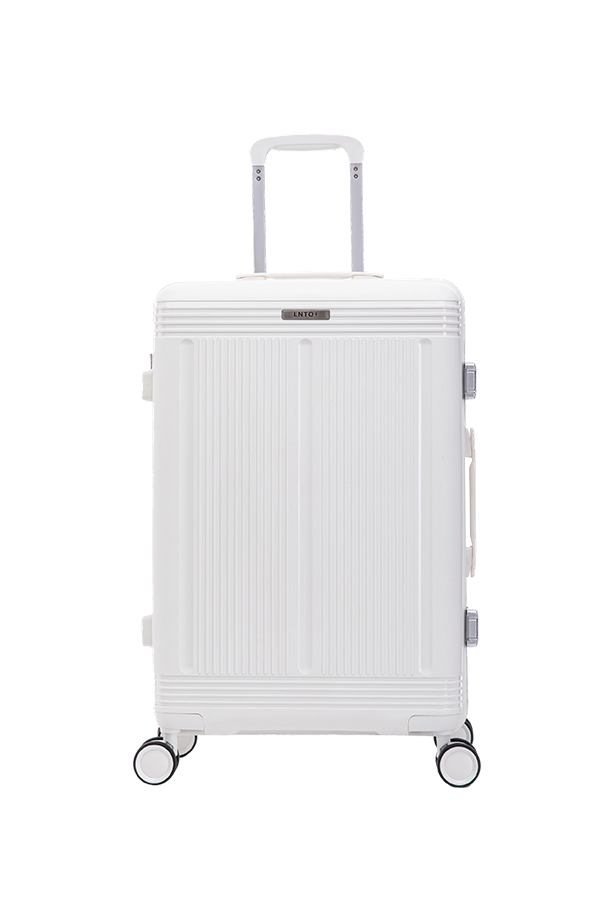
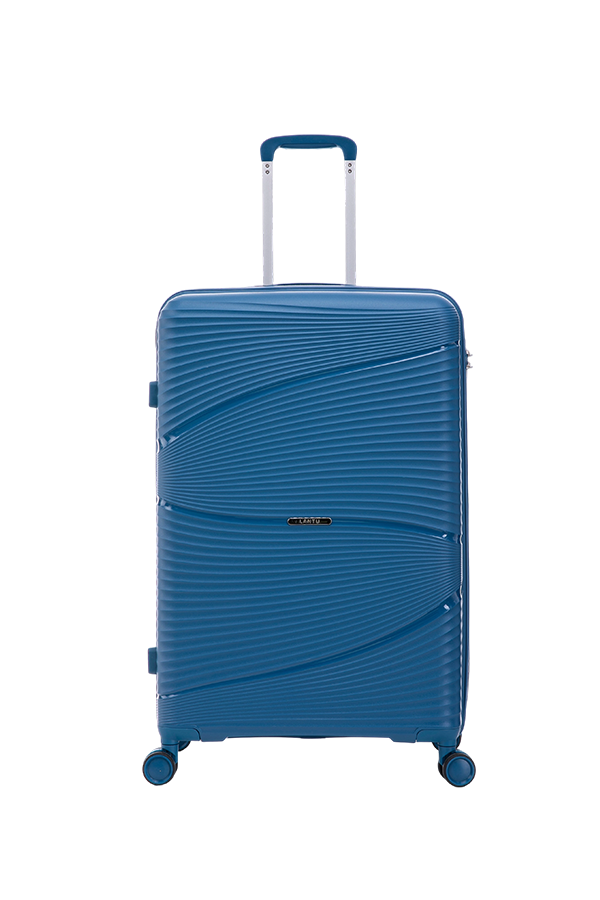
The shell also functions as a design canvas. Where soft luggage breaks up its surface with external pockets, straps, and stitched panels, a hard case offers one continuous surface. Brands have leaned into that hard with glossy finishes, matte textures, embossed patterns, and colors that soft luggage manufacturers rarely attempt because the material doesn't hold color or texture the same way.
A few things tend to drive the appeal specifically:
- A shape that stays consistent from empty to full
- Interior storage that doesn't shift or sag
- A broad range of finishes—glossy, matte, textured, printed
- Instant visual recognition on a crowded carousel
- Reasonable fit across business, leisure, and family travel
- A hard boundary between "outside the case" and "inside the case"
None of this makes hard shell the automatic right choice for every trip. It explains why the category keeps growing among travelers who'd rather pack into a fixed space than negotiate with a flexible one.
The suitcase, in that sense, becomes part of the packing decision itself—not just something you zip shut once the folding is done.
How Does Structured Packing Change the Travel Experience?
Packing habits vary more than people admit. Some travelers roll every shirt with military precision; others just start dropping things in and hope for the best. A rigid shell nudges behavior toward the former, mostly because the fixed volume forces some kind of plan.
Most hard shell cases divide the interior with a zippered mesh panel on one side and compression straps on the other, sometimes with a smaller zip pocket for shoes or a laundry bag. That layout doesn't just save space—it makes items easier to find without unpacking the whole case on a hotel bed at midnight looking for a phone charger.
| Packing Need | Common Traveler Concern | Possible Hard Shell Suitcase Benefit |
|---|---|---|
| Clothing | Items shift and mix during transit | Compression straps can help keep folded items in place |
| Shoes | Need separation from clean clothing | A dedicated shoe pocket or bag can help keep them apart |
| Accessories | Small items can get lost in a large space | Zippered mesh pockets can help organize loose items |
| Personal Items | Different items need different handling | Divided compartments can separate categories |
| Travel Documents | Need to be reachable without full unpacking | A front pocket or top compartment can provide quick access |
| Gifts | Fragile or oddly shaped items need care | A rigid shell can offer added resistance to external pressure |
| Toiletries | Liquids may leak onto clothing | A separate zip pouch or pocket can help isolate them |
| Electronics | Cables and chargers can become tangled | Small mesh pockets can help keep cords organized |
How someone actually packs tends to predict which suitcase style they'll gravitate toward. Anyone who likes a clean, almost puzzle-piece relationship between shell shape and interior layout usually ends up choosing hard-sided luggage without much deliberation.
Can Hard Shell Suitcases Offer a Sense of Protection?
Protection is the other big draw, and it's not purely psychological. A polycarbonate shell—the material used in most premium hard cases—flexes under impact and returns to shape, absorbing shock instead of transferring it directly to whatever's packed inside. Cheaper ABS shells are more rigid and less forgiving, which is part of why they tend to crack rather than dent when dropped hard.
That resilience matters most during the parts of a trip nobody controls directly: the case gets tossed from a cart onto a conveyor belt, stacked under a bus with forty other bags, or shoved into an overhead bin by someone in a hurry. A rigid shell absorbs a lot of that abuse without transmitting it straight through to a laptop or a bottle of wine packed inside.
It's not an absolute guarantee, though. Shell thickness, the quality of the seams around zippers, and how tightly the case is packed all affect how well it actually survives rough handling. An overstuffed hard case under enough pressure can still crack at a seam, and a poorly made shell won't outperform a well-built soft bag just because it's rigid.
The more useful question isn't "hard shell or not," but whether the specific case—its shell thickness, seam construction, and locking hardware—actually matches how roughly the traveler expects it to be handled.
Why Does Appearance Matter More in Modern Luggage Choices?
A suitcase spends a surprising amount of a trip in public view—rolling through a terminal, sitting on a luggage cart, circling a baggage carousel next to forty nearly identical black bags. That visibility alone has turned appearance into a real functional consideration, not just a cosmetic one.
Hard shell luggage happens to offer the largest, cleanest canvas for that kind of design work. Manufacturers can apply high-gloss finishes, matte textures, geometric patterns, or solid colors across an unbroken surface in ways that soft luggage—broken up by seams, zippers, and external pockets—can't really replicate.
There's a practical payoff buried in the aesthetics, too. A bright teal case with a distinctive pattern is a lot easier to spot on a crowded carousel than the fifth identical black roller bag in a row—which, after enough travel, starts to feel like a genuinely useful feature rather than a vanity one.
The relationship between looks and function shows up in a few recognizable ways:
- Personal expression Color and finish let travelers pick something that actually reflects their taste, rather than defaulting to black because that's what's available.
- Faster identification A distinctive shell cuts down the seconds spent squinting at a carousel full of near-identical bags.
- Product differentiation Brands use finish and pattern to separate a premium line from a budget one without changing the underlying shell material.
- Travel coordination Some travelers deliberately match luggage sets, or coordinate a case with a bag or jacket they travel with often.
- Visual simplicity Plenty of buyers still gravitate toward matte black or navy—minimal design remains a legitimate preference, not just an absence of choice.
This is a big part of why exterior design gets treated as a core product decision now, not a finishing touch applied after the engineering is done.
How Do Hard Shell Suitcases Fit Different Types of Travel?
Travel patterns vary enough that no single case size or style covers everyone. A two-day business trip calls for something very different from a two-week family holiday, and someone hopping between three cities by train has different priorities than someone flying nonstop to one destination.
Hard shell cases handle this range reasonably well because the same basic shell construction scales across sizes—carry-on, medium, and large—without losing its structural benefits.
| Travel Situation | Common Luggage Concern | How Hard Shell Design May Fit |
|---|---|---|
| Business Travel | Suits and shirts need to stay organized | A rigid shell and compression straps can help limit shifting |
| Family Trips | Multiple people's items need sorting | Divided interiors and larger sizes can support organized packing |
| Weekend Travel | Packing needs to stay light and compact | Compact hard shell designs can encourage efficient packing |
| City Travel | Cases may move across different surfaces | Spinner wheels and a structured frame can support easier movement |
| Holiday Travel | Mixed items may include clothing, souvenirs, and gear | Some hard shell designs offer flexible interior storage |
| Train Travel | Frequent lifting on and off platforms | Lightweight shell materials may make handling easier |
| Air Travel | Bags may experience different handling conditions | A rigid shell can provide an additional outer layer around packed items |
| Personal Travel | Style can matter alongside function | A range of colors and finishes can support personal preferences |
This isn't an argument that hard shell wins in every category. Soft luggage still has a real edge for travelers who need external pockets for quick-grab items, or who routinely need the extra give to stuff in things they didn't plan for—an oddly shaped gift, an extra pair of boots, a stack of paperback books bought on the trip.
The right answer really does come down to how a specific person travels, not which category is objectively "better."
Could Material Development Change the Appeal of Hard Shell Suitcases?
Shell material has quietly become one of the more consequential decisions in hard-side luggage design, and it explains a lot of the price and performance gap between cases that look similar on a store shelf.
Polycarbonate is the material most premium hard shells use now—lightweight, genuinely impact-resistant, and flexible enough to absorb a hit and spring back rather than crack. ABS is cheaper and more rigid, which sounds like an advantage until you realize rigid materials tend to crack under sharp impact instead of flexing. Polypropylene sits somewhere in between, valued mainly for being lightweight and reasonably tough, though it can scratch more visibly than polycarbonate.
That material choice ripples through the entire product:
- Surface finish—glossy shells show scratches more than textured ones
- Overall weight—a real concern given airline carry-on limits
- Flexibility under impact—rigid versus give-and-return behavior
- How the shell ages—UV exposure can make some plastics brittle over years of use
- Manufacturing cost, which shows up directly in retail price
- How well the surface takes color, printing, or texture
- Long-term durability under repeated rough handling
As material science keeps advancing, manufacturers have more room to experiment—mixing polycarbonate blends, adding texture that hides scratches, or using recycled plastic content without sacrificing shell strength. That's given hard shell luggage a much wider design range than it had a decade ago, from minimalist matte cases to loudly patterned ones with genuinely different feel and weight.
Should Travelers Choose Hard Shell Suitcases Over Soft Luggage?
There's no universal winner here, and anyone claiming otherwise is probably selling something.
Hard shell and soft luggage solve different problems well. Someone who likes packing into a fixed, divided space will probably prefer a hard case. Someone who routinely comes home with more than they left with—extra clothes, souvenirs, a bottle of duty-free liquor—often finds soft luggage's expandability more forgiving.
External storage tips the scale for some travelers too. Soft bags typically offer front pockets that hold a jacket, a water bottle, or documents without opening the main compartment. Hard shell cases usually skip this in favor of a cleaner exterior, pushing that organization inside instead.
A few honest questions help settle the decision:
How do you actually pack?
Divided, planned packing suits a hard shell. Loose, adjust-as-you-go packing often suits soft luggage better.
What kind of items do you usually carry?
Rigid, structured items travel well in a hard case. Oddly shaped or flexible items sometimes need the give that soft luggage provides.
How often does the case get handled roughly?
Frequent transfers between transport modes favor the shock absorption of a good hard shell.
Does exterior look matter to you?
Hard shells offer more finish variety; soft luggage tends toward practical over decorative.
Do you need quick-access external pockets?
If yes, soft luggage's exterior storage usually wins out.
What's the actual trip length and type?
Short, planned trips suit hard shells well. Long or unpredictable trips sometimes favor soft luggage's flexibility.
Answering these honestly matters more than following whatever's trending at the airport that particular year.
What Are Luggage Manufacturers Changing to Match Traveler Preferences?
The luggage industry has stopped treating the shell as the whole product. Buyers now expect the interior layout, the wheels, the handle, the locks, and the finish to all work together—and manufacturers have reorganized their design process accordingly.
Current development work tends to focus on:
- Interior layout—dividers, compression straps, and dedicated pockets
- Exterior finish—matte versus gloss, texture, and colorway range
- Handle design—telescoping mechanisms that don't wobble under load
- Wheel type—four-wheel spinners now dominate over two-wheel rollers
- Closure hardware—integrated TSA-approved combination locks are close to standard now
- Shell material—polycarbonate blends replacing older ABS-heavy designs
- Size tiers—carry-on, medium, and large, often sold as matched sets
- Surface treatment—scratch-resistant coatings and textured finishes
- Retail presentation—packaging and unboxing experience, increasingly relevant for online sales
These elements interact in ways that aren't always obvious from a product photo. A beautifully finished shell with a wobbly telescoping handle turns into a genuinely frustrating travel companion fast. A perfectly organized interior doesn't help much if the case is heavy enough to blow past a 23kg checked-bag limit before you've even started packing.
That's pushed hard shell suitcase development well past "make a rigid box that looks nice." Manufacturers are increasingly designing around the entire arc of a trip—getting packed at home, dragged through a terminal, stacked under a bus, and unpacked in a hotel room—because each of those moments shapes whether a traveler buys the same brand again.
The rise of hard shell luggage, in the end, tracks a broader shift in what people actually expect from a trip. Some want the discipline of structured packing. Some want the reassurance of a shell that can take a hit. Others mostly just want a suitcase that looks like theirs on a crowded carousel.
Hard shell cases manage to hit all three at once—fixed exterior, organizable interior, and a genuinely wide range of finishes—which is really the whole explanation for why they've taken over so much airport floor space. As manufacturers keep studying how people actually travel, the conversation has moved past "hard or soft" and toward how shell material, interior design, wheels, and everyday handling all need to work together across an entire trip.