

 English
 Deutsch
Packing for a business trip is not quite the same as packing for a holiday. A traveler may need a laptop, documents, chargers, formal clothes and personal items, all within one suitcase. During the trip, some of these things need to be reached quickly without taking everything else out.
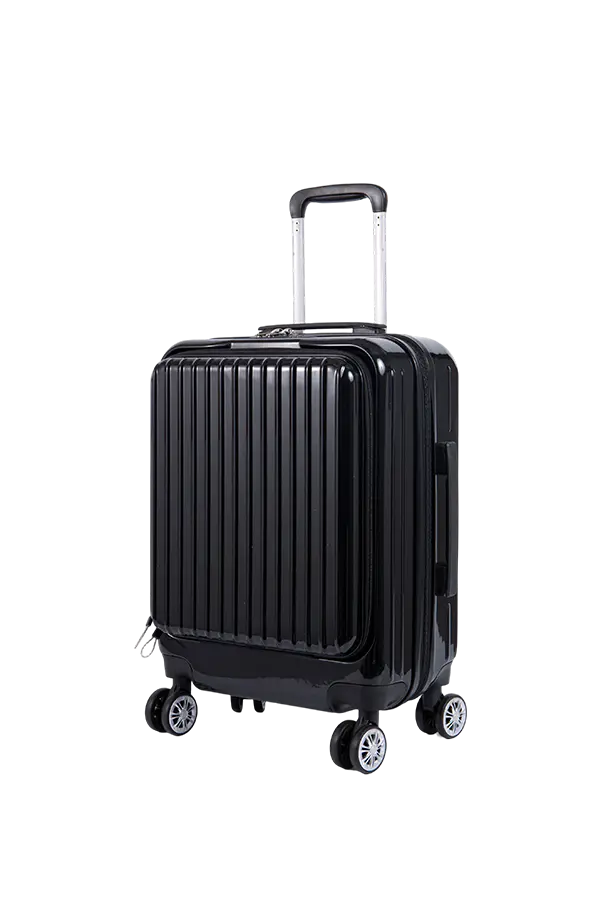
This is where a side opening suitcase can be useful. Instead of opening the entire case like a traditional clamshell suitcase, certain designs provide access through a separate front or side panel. The arrangement makes it possible to reach selected compartments without disturbing all the packed belongings.
A Different Way to Access Your Luggage
Traditional suitcases usually open into two large sections. This works well when packing at home, but it can be inconvenient in a small hotel room where there is little space to spread the case open.
Side opening designs take a different approach. Depending on the model, the suitcase may have a front access panel or a side-mounted opening connected to the main storage compartment.
Inside, manufacturers can arrange dividers, pockets and compression straps to keep clothing and accessories separated. Travelers can then retrieve particular items without necessarily opening both halves of the suitcase.
The actual convenience depends on the panel size and internal layout. A side opening alone does not guarantee better organization; poorly positioned compartments can make items just as difficult to reach.
Keep Work Equipment Separate From Clothing
Business travelers often carry items they need throughout the journey, not just after reaching their destination. Laptops, tablets, passports, presentation documents and charging accessories may need to be accessed at the airport or during a hotel check-in.
A dedicated front-access compartment can keep these items separate from shirts, trousers and toiletries. Some designs also include padded laptop sections and smaller pockets for cables or documents.
There are a few things worth checking:
- Whether the laptop compartment fits the actual device dimensions.
- Whether padding protects the equipment from contact with other items.
- Whether documents can be stored without bending.
- Whether the compartment can be opened while the suitcase is upright.
- Whether valuables remain properly secured when the panel is closed.
A separate compartment is useful only when its dimensions and protection match what the traveler intends to carry.
Side Opening and Traditional Clamshell Suitcases Compared
The two designs serve different packing habits. A clamshell suitcase provides access to most of its contents at once, while a side opening model can offer more selective access.
| Design factor | Side opening suitcase | Traditional clamshell suitcase |
|---|---|---|
| Opening structure | Front or side access panel | Two main halves |
| Item retrieval | Allows access to selected compartments | Usually exposes most of the interior |
| Organization | Can separate frequently used items | Commonly uses two divided packing sections |
| Space required | Some designs need less opening clearance | Usually requires room for both halves |
| Main advantage | Convenient access to work essentials | Clear view of the entire packed interior |
| Suitable users | Travelers who frequently retrieve selected items | Travelers who prefer conventional full-width packing |
Neither design necessarily offers more storage capacity. Actual usable space depends on the shell dimensions, compartment construction, lining and hardware.
The Opening Mechanism Needs to Withstand Regular Use
Business luggage may be opened several times a day during frequent trips. The hinges, zippers, panel connections and fastening points therefore need to tolerate repeated operation.
Manufacturers should pay particular attention to panel alignment and the strength of the surrounding shell. A poorly supported opening panel may become loose or difficult to close after repeated use.
Internal compression straps and dividers also matter. They should hold clothing in place without taking up too much room. For formal clothing, a compartment that prevents excessive movement can help reduce creasing during transportation.
Wheel and handle construction should not be overlooked. A suitcase that is easy to pack but difficult to pull through an airport is unlikely to satisfy frequent business travelers. Wheel stability, telescopic handle strength and rolling performance all need to be considered.
Material and Construction Affect Long-Term Performance
Hard-shell side opening suitcases commonly use materials such as polycarbonate, ABS or combinations of these plastics.
Polycarbonate offers good impact resistance and flexibility, while ABS provides rigidity and can be a more economical option. The finished performance depends on the specific material grade, shell thickness and molding quality.
The additional access panel also creates another structural area that manufacturers need to inspect. Corners, hinges, zipper connections and locking points should remain stable during repeated handling.
For business travel products, the appearance matters too. Scratches, surface deformation and damaged panel edges can quickly make a suitcase look worn.
What to Check Before Choosing a Side Opening Suitcase
A useful way to evaluate the design is to pack it as though preparing for an actual business trip. Include a laptop, documents, formal clothing, toiletries and charging accessories, then try retrieving each item without unpacking everything.
Other details deserve a closer look:
- Compartment dimensions: Check that work equipment fits without forcing the panel closed.
- Opening clearance: Make sure the access panel can open in a narrow hotel room or crowded setting.
- Zippers and hinges: Open and close the suitcase several times to check for resistance or misalignment.
- Weight and capacity: Compare the empty weight with the usable storage volume.
- Mobility: Test the wheels and handle with the suitcase fully packed.
- Security: Check the locking arrangement and whether frequently accessed compartments can be secured properly.
These checks give a much clearer idea of everyday convenience than judging the suitcase by its external appearance.
A More Practical Layout for Business Travel
The main appeal of a side opening suitcase is not necessarily that it holds more luggage. It changes how travelers reach what they have packed. A separate access panel can be particularly useful for laptops, documents and other items that are needed throughout a journey.
For luggage manufacturers, the real design challenge is making that access convenient without weakening the shell or sacrificing useful storage space. Panel construction, compartment dimensions, closure quality and overall weight all need to work together. A well-executed design can make frequent packing and unpacking less troublesome, especially for travelers who spend much of their time moving between airports, hotels and meetings.