

 English
 Deutsch
Trolley Bag With TSA Lock gets pulled across airport floors, lifted into cars, and knocked against other luggage. Its wheels, handles, shell, and lock need to stand up to everyday use. Manufacturers and buyers should check these parts individually and as a complete bag to catch problems before shipment.
A visual inspection helps, but it won't reveal everything. Some issues only show up when the bag is loaded, rolled, or handled repeatedly. Here are practical ways to check the main components during quality control.
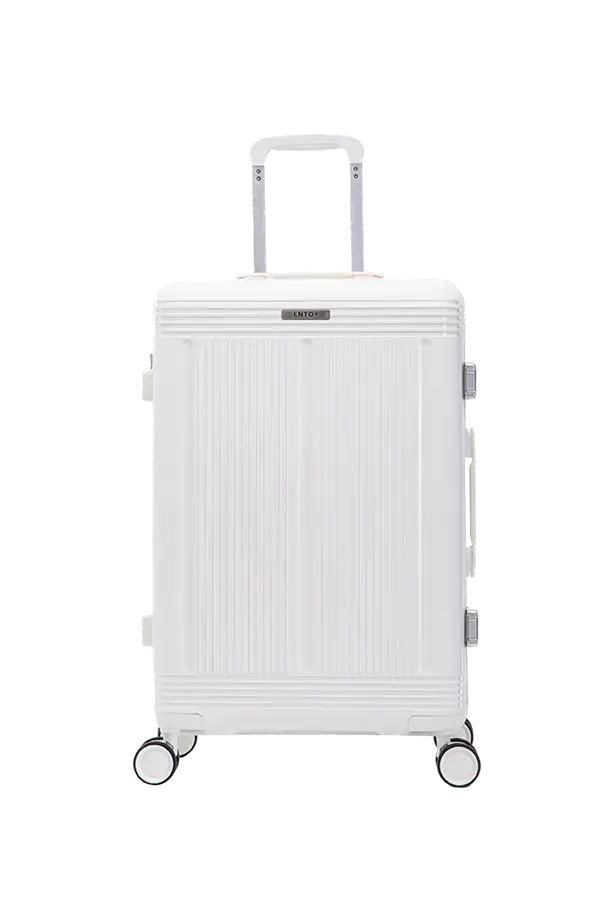
How to Test Trolley Bag Wheels for Wear and Stability
Check the wheels, housings, axles, and screws for cracks, uneven wear, loose fittings, or gaps. Spin each wheel by hand. It should turn smoothly without sticking, grinding, or excessive wobble. On four-wheel spinner luggage, check that each wheel swivels as designed.
Then roll the bag under a defined test load. Move it across a smooth floor, followed by a representative rough surface or low threshold. Listen for unusual noise and see whether the bag pulls to one side. Afterward, check the wheels and mounting points again for looseness or damage.
Use the same bag weight, route, and conditions for each sample. An empty bag may roll well while a loaded one wobbles or shifts.
Pay attention to wheel alignment, too. A wheel that looks fine during a quick inspection may develop problems when it has to support the full weight of the bag.
How to Test Trolley Bag Handles Under Load
A trolley bag usually has a telescopic pulling handle and top or side carrying handles. Check each separately.
Testing the telescopic handle
Extend and retract the handle several times. The tubes should move smoothly, and the locking mechanism should hold at each intended position. Watch for bent tubes, loose buttons, excessive side-to-side movement, or a handle that slips down unexpectedly.
Pack the bag to a set test weight and pull it along a specified route. Check the mounting points for movement, bending, or loosening. Record any problems so they can be traced back to the component or assembly process.
Testing the carrying handles
Apply a controlled load that matches the bag's rated capacity and intended use. Before and after lifting, inspect the stitching, rivets, screws, brackets, and reinforcement panels. A handle may be strong enough on its own but still fail where it's attached to the shell or fabric.
Avoid arbitrary overloads that exceed the product specification. Test loads and acceptance limits should reflect the bag's intended use and any applicable requirements.
|
Handle component |
Recommended test |
Defects to watch for |
|---|---|---|
|
Telescopic tubes |
Extend and retract repeatedly |
Jamming, bending, excess movement |
|
Locking mechanism |
Lock and release at each position |
Failure to engage or unexpected sliding |
|
Top handle |
Controlled lifting test |
Loose attachment, tearing, deformation |
|
Side handle |
Controlled lifting test |
Weak stitching, loose fasteners, cracks |
Handle strength depends on the full assembly. Tubes, grips, fasteners, and reinforcement points must all support the intended load.
How to Check the Shell for Impact Resistance
Trolley bag shells are commonly made from ABS, polycarbonate (PC), or a combination of plastics. ABS is often chosen for its balance of rigidity and cost, while polycarbonate is valued for its impact resistance and flexibility. Actual performance depends on the resin grade, shell thickness, shape, and manufacturing quality.
Look for cracks, deep scratches, uneven surfaces, or weak spots near corners, wheel housings, handle mounts, and lock openings. Apply controlled pressure and check whether the shell flexes as its design allows.
Impact testing needs clear, repeatable conditions. Manufacturers may use a defined drop or impact test with a specified sample weight, impact location, temperature, and drop height.
After testing, inspect the shell for cracks, permanent deformation, broken fittings, or problems opening and closing the bag. Check the internal attachments as well. The shell may look fine on the outside while a handle bracket or wheel mount has come loose.
How to Test a TSA Lock and Its Installation
Check that the lock housing sits securely, without cracks, gaps, or unwanted movement. Make sure the zipper pulls align with the mechanism.
Follow the manufacturer's instructions to set the combination and lock the designated components. Enter the correct code to check that the lock releases, then try an incorrect code and confirm that it stays engaged. Repeat the locking and unlocking cycle several times. If the lock has a reset button or lever, check that it works as intended.
The lock should work without sticking or needing excessive force. A TSA-recognized lock lets authorized security personnel open compatible luggage with an appropriate inspection tool, but it does not prevent every kind of unauthorized access. Don't force it with improvised tools during routine checks.
Inspect How the Components Work Together
A component may pass an individual check but cause trouble when the bag is assembled. Rolling it over an uneven surface can expose a loose wheel mount; pulling the handle may reveal movement where it joins the shell. Opening and closing the compartment can also show whether the zipper and lock interfere with one another.
A complete-bag check should cover:
- Rolling the loaded bag in different directions.
- Extending, retracting, and pulling the handle.
- Lifting the bag by its designated carrying handles.
- Opening and closing the main compartment.
- Locking and unlocking the TSA mechanism.
- Checking fittings and the shell again afterward.
These checks can uncover alignment or assembly problems. They also help confirm that the parts work together under conditions similar to everyday travel.
Set Clear Quality-Control Standards
Before inspection starts, define the test load, rolling route, cycle count, impact conditions, and pass/fail criteria. Record results so samples and production batches can be compared fairly. Without consistent test conditions, it's difficult to tell whether a change in results comes from the product or the way it was tested.
|
Component |
Inspection focus |
What to record |
|---|---|---|
|
Wheels |
Rotation, alignment, attachment |
Noise, wobble, looseness |
|
Handles |
Operation, load support, attachment |
Slipping, bending, damage |
|
Shell |
Surface, rigidity, impact response |
Cracks, deformation, broken fittings |
|
TSA lock |
Locking, release, reset function |
Jamming, inconsistent operation |
|
Complete bag |
Stability and component fit |
Functional faults and post-test damage |
These are general inspection guidelines, not a replacement for applicable product standards or a validated laboratory test plan. Set loads, cycle counts, and acceptance limits according to the product specification and intended market. Keep the records for future production checks and supplier reviews.
Improve Trolley Bag Quality Before Shipment
Test the wheels, handles, shell, and TSA lock individually, then check the assembled bag. This approach helps catch faults before shipment and gives buyers a clearer picture of product quality.
Wholesalers and luggage buyers should ask suppliers for inspection records, material details, rated capacity, lock specifications, and a clear process for handling defects. Regular checks can reduce avoidable failures and help a trolley bag perform reliably during everyday travel.