

 English
 Deutsch
Walk through any luggage store and most suitcases seem quite similar at a glance. Clean shapes, smooth wheels, retractable handles. Nothing looks overly complicated. Yet the process behind each trolley case is far from simple. It is not a single straight line. It feels more like a series of small decisions layered together.
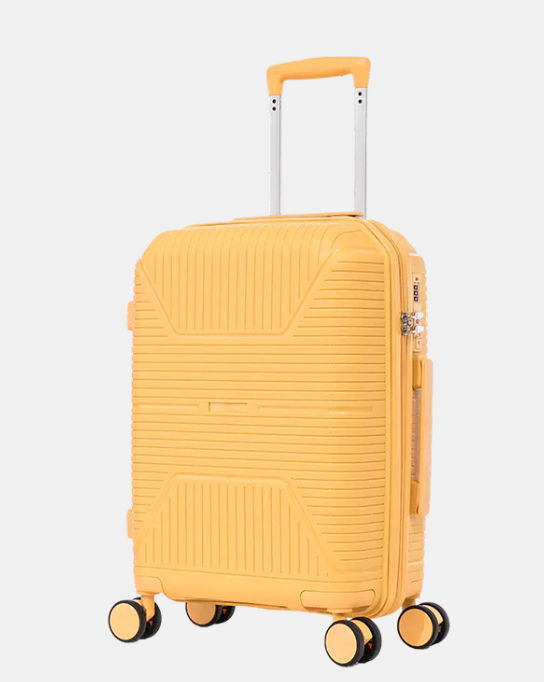
In Trolley Luggage Factory , production does not move in a perfectly rigid pattern. Workers adjust along the way. Designers rethink details even after samples are made. A suitcase is built piece by piece, but also corrected piece by piece.
Some steps are visible. Others happen quietly in the background.
How Does A Suitcase Design Actually Begin?
Ideas rarely start in a dramatic way. A design might come from a customer request. It might also begin with a small observation, such as how travelers struggle with space or weight.
Sketches are often loose at the beginning. Nothing is fixed yet. Designers play with proportions, corners, and internal layout. One version may look balanced but feel awkward when handled. Another might look simple but work better in practice.
There is often a back-and-forth between design and production teams. A drawing may look fine on paper but raise questions once someone thinks about how it will be built. At that point, changes happen quietly. No big announcement. Just small corrections.
Prototypes appear sooner or later. They are not polished. Some look rough around the edges. That is expected. Their purpose is to reveal problems early, before the idea moves too far.
What Happens Before Production Even Starts?
Before any assembly begins, materials need to be sorted out. This part tends to be underestimated.
Factories do not simply pick materials off a shelf and start working. There is checking involved. Surfaces are examined. Colors are compared under different lighting. Even a slight mismatch can stand out once everything is assembled.
Cutting is another step that requires attention. Pieces must match the design, but also allow room for assembly. Too tight, and parts will not fit. Too loose, and the structure may feel unstable.
Storage also plays a quiet role. Materials need to be organized so workers can find them quickly. A cluttered workspace slows everything down. It also increases the chance of mixing the wrong parts.
How Is The Shell Shaped In Real Production?
The outer shell is what most people notice first. It gives the suitcase its identity.
For rigid cases, shaping usually involves forming flat material into curved surfaces. This is not just about pressing a shape. The material needs to hold that shape afterward. If it springs back or warps, the whole structure is affected.
Soft cases follow a different path. Panels are cut and stitched together. Reinforcement is added in places that take more stress, like corners or edges. The goal is not to make it stiff, but to give it enough structure so it does not collapse.
Workers often rely on experience here. They can tell by touch or sight if something feels slightly off. That kind of judgment does not always come from written instructions.
How Do All The Parts Come Together?
Assembly is where things start to look like a suitcase.
Wheels are usually attached early. Their position matters more than people expect. A slight shift can change how the case rolls. If alignment is off, movement may feel uneven.
Handles follow. The telescopic handle must slide in and out without resistance. It should not wobble too much either. Getting this balance right often takes adjustment.
Zippers or closures are fitted along the opening. This step may seem routine, but it requires care. If the path is not smooth, users will notice it immediately.
Inside the case, compartments begin to take shape. Some designs keep it simple. Others include multiple sections. There is no single approach that fits all uses.
What Is Done To Improve The Interior Space?
The inside of a suitcase is easy to overlook, yet it affects how people use it every day.
Lining is added to cover the internal structure. It also gives the case a more finished feel. If the lining is uneven or loose, it can create small annoyances during use.
Compartments are arranged based on the intended function. A travel case for short trips may look different from one designed for longer use. There is always a balance between open space and organized sections.
Straps or holders are attached to keep items in place. Without them, contents may shift during movement. That can affect both convenience and protection.
This stage often involves small adjustments. Workers may tighten or reposition elements to improve fit. These changes are rarely dramatic, but they make a difference over time.
How Is The Outer Appearance Refined?
Once the structure is complete, attention turns to appearance.
Surface finishing can change how the suitcase feels and looks. Some surfaces are smooth. Others have texture. These choices are not only visual. They can also help reduce visible wear.
Colors are checked again at this stage. Lighting conditions matter. A color that looks consistent in one area may appear different elsewhere.
Logos or labels are added carefully. Placement is considered so it does not interfere with the overall design. Too large, and it feels distracting. Too small, and it may not be noticed.
This part of the process is quiet but important. It shapes how the product is perceived before anyone even uses it.
How Do Workers Know A Suitcase Is Ready?
Before packaging, each piece goes through a series of checks. These are not always formal or mechanical. Some rely on simple observation.
Wheels are rolled across the floor. The motion should feel smooth. Any unusual sound stands out immediately.
Handles are extended and pushed back. If something sticks or feels loose, it is adjusted.
Zippers are opened and closed repeatedly. This helps reveal any tension or misalignment.
Surfaces are scanned for marks. Even small imperfections are easier to notice at this stage than later.
Below is a simple overview of how the process unfolds:
| Stage | What Happens | What Workers Pay Attention To |
|---|---|---|
| Design | Ideas and rough models | Practical use and balance |
| Material Prep | Cutting and sorting | Consistency and matching |
| Shell Formation | Shaping or stitching | Structure and alignment |
| Assembly | Adding wheels and handles | Stability and smooth movement |
| Interior Setup | Lining and compartments | Fit and usability |
| Surface Finishing | Texture and visual details | Appearance consistency |
| Inspection | Final checks | Function and small details |
What Happens Right Before Shipping?
Packing may seem like a simple final step, but it has its own rhythm.
Each suitcase is cleaned. Dust from earlier stages is removed. This small step changes how the product is received.
Protective layers are added to prevent scratches. Boxes are chosen to match the size closely. Too much space inside can cause movement during transport.
Labels are attached for identification. Clear labeling helps avoid confusion later in the supply chain.
Even at this stage, adjustments may still happen. A worker might notice a minor issue and send the product back for correction. Nothing is entirely fixed until it leaves the factory.