

 English
 Deutsch
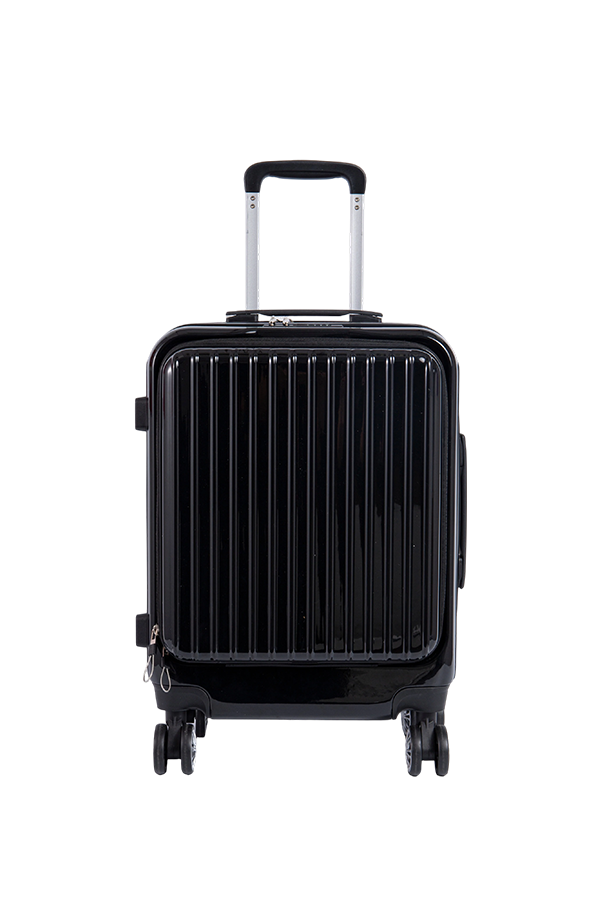
Front Opening Hard Shell Luggage is designed for a particular kind of travel problem: reaching a laptop, notebook, or small essential without laying the entire case open. That convenience changes more than the packing layout. The extra panel, hinges, and closure points become part of the shell’s structure, so the material needs to work well with the design.
Polycarbonate, polypropylene, PC/ABS blends, and ABS are common choices for plastic luggage. Aluminum appears in some premium ranges. None is automatically best in every situation. The right purchase balances empty weight, resistance to everyday knocks, and price with how often the suitcase will be used.
Stronger on Paper Does Not Always Mean Better in Use
Polycarbonate (PC) is valued for its impact resistance and ability to flex under pressure. A well-made shell can take a knock and recover without cracking, making PC a sensible option for people who travel frequently or check their bags regularly. It often costs more than entry-level materials, and its surface can still pick up scuffs. Paying extra makes sense when the case’s construction and warranty support the price.
Polypropylene (PP) is often chosen when low weight is the priority. Its low density helps keep the empty suitcase light, and its flexibility can help it absorb certain impacts. The trade-off is that some PP cases feel less rigid, depending on the design and material grade. For a front-opening case, pay particular attention to how firmly the access panel sits in place and whether the hinges and lock points feel secure.
PC/ABS blends sit between these options. By combining polycarbonate with acrylonitrile butadiene styrene, manufacturers can balance cost, rigidity, finish, and impact performance. A well-engineered blend can be a good value for business trips and family holidays, especially when the suitcase includes useful features such as a padded laptop section. The label alone tells little about the quality, however; formulations and molding standards vary.
ABS remains attractive for budget luggage. It is economical to produce and can provide a rigid shell with a neat finish. For occasional light travel, it may be perfectly adequate. Compared with good-quality PC, ABS is generally more vulnerable to cracking under severe impact, so it may be a less convincing choice for a suitcase that is checked frequently.
Aluminum belongs to a different category. It offers a structured, premium appearance, but panels may dent and the finished case can be expensive. It is worth considering for buyers who specifically want metal construction; it is rarely the obvious value choice for someone focused on low weight and everyday affordability.
A Quick Comparison Before You Buy
| Material | Where it makes sense | Main compromise | Relative price |
|---|---|---|---|
| Polycarbonate | Frequent travel and checked luggage | Higher cost; scuffs remain possible | Medium to high |
| Polypropylene | Keeping empty weight low | May feel more flexible | Low to medium |
| PC/ABS blend | Everyday use and balanced value | Performance depends on formulation | Low to medium |
| ABS | Occasional trips and tighter budgets | Less tolerant of severe impact in many designs | Low |
| Aluminum | Premium styling and a rigid case | Can dent; often costs more | High |
These are general comparisons, not guarantees. Shell thickness, molded ribs, temperature, resin grade, and manufacturing quality all affect performance. Two cases carrying the same material label can behave quite differently.
The Front Panel Is a Quality Check of Its Own
Before choosing based on the shell alone, open and close the front compartment several times. The panel should move smoothly, line up with the body, and close without being forced. Check the hinge attachment, zipper track or lock, and the area around the corners, where stress can concentrate. A flexible shell is not necessarily weak, but excessive movement around the opening can undermine confidence in the whole design.
Then compare empty weight with usable capacity. A lightweight material may lose some of its advantage if the case adds thick laptop padding, metal fittings, and multiple organizers. Those features can still be worthwhile when they suit your routine; the key is knowing what is contributing to the weight.
Wheels, handles, and warranty terms deserve the same scrutiny. A durable shell cannot compensate for a handle that wobbles or wheels that wear quickly. Look for clear material specifications and realistic warranty conditions. Claims such as “unbreakable” are less useful than details about construction, testing, and coverage.
Match the Material to the Trips You Actually Take
For frequent flyers, polycarbonate is often the strongest all-round starting point. Travelers who want a balance between cost and everyday performance should compare PC/ABS models closely. Polypropylene makes sense when the empty weight matters most, while ABS can meet the needs of occasional travelers on a tighter budget. Aluminum is best treated as a preference for a particular look and construction, not a shortcut to guaranteed durability.
A sensible comparison uses suitcases of similar size and checks total weight, panel stability, hardware, capacity, and warranty side by side. The best value is rarely determined by resin alone. It comes from a shell material that suits the intended use, combined with a front-opening mechanism and overall build that are made to last.